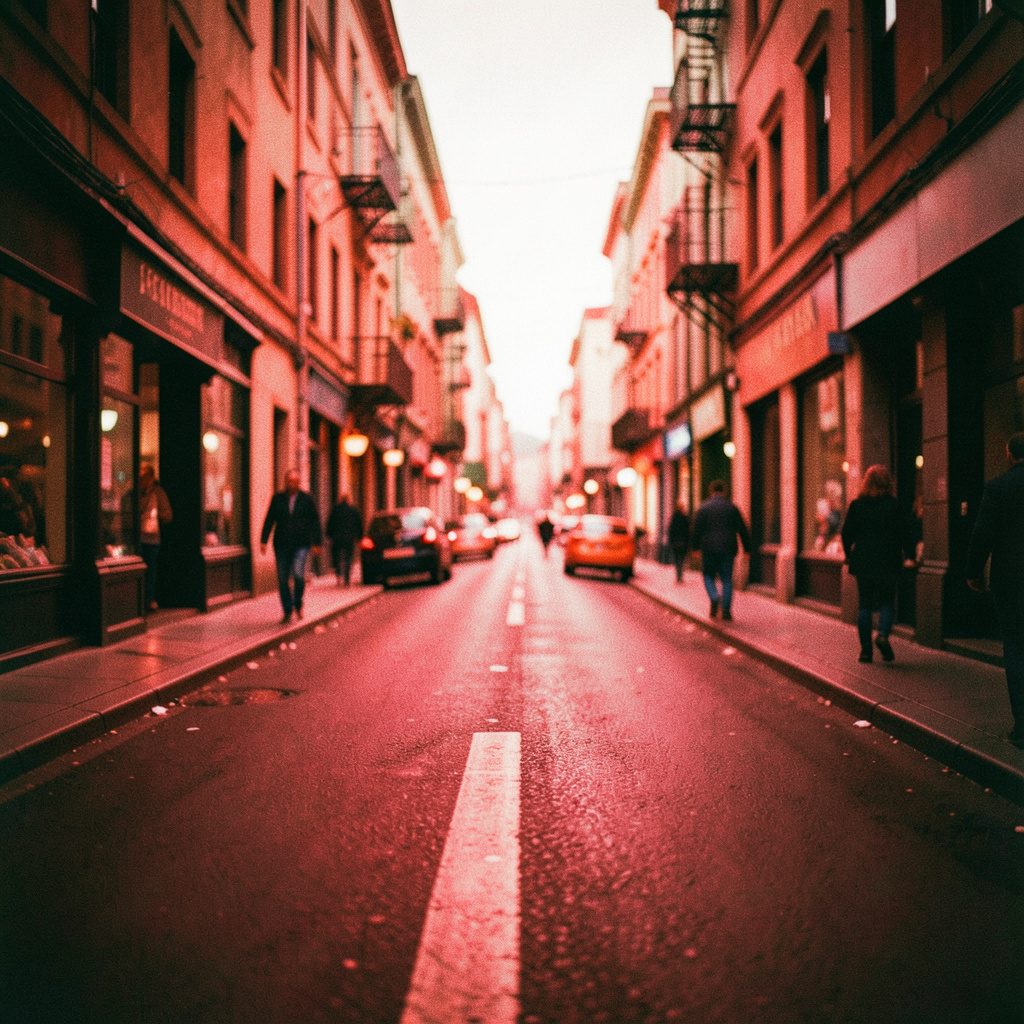
Street Photography
Street photography captures candid, unposed moments in public spaces, revealing the rhythm and texture of everyday life. Rooted in the early 20th century, the style gained prominence through practitioners who used compact cameras to document urban scenes with immediacy and honesty.
At Trikimailua, we explore how street photography intersects with the broader arts — from its compositional parallels with drawing and painting to its role in shaping visual storytelling. The genre rewards patience, observation, and an eye for fleeting gestures that might otherwise go unnoticed.
Key elements include timing, framing, and the ability to work with available light. Whether shot in monochrome or color, compelling street images often balance spontaneity with a strong sense of place.
Experimental Photography
Experimental photography pushes beyond conventional techniques, embracing alternative processes, unusual materials, and deliberate manipulation of the image. Practitioners may work with double exposures, chemical treatments, lens modifications, or digital compositing to produce results that challenge traditional definitions of the photograph.
This approach often blurs the line between photography and other visual arts, inviting dialogue with sculpture, painting, and mixed media. The emphasis is on exploration rather than fidelity — each image becomes a record of a process as much as a finished picture.
From camera-less photograms to glitch art and beyond, experimental photography continues to expand what the medium can express.
Connections to the Wider Arts
Photography does not exist in isolation. The compositional principles that guide a strong photograph — balance, contrast, leading lines, negative space — echo those taught in drawing and painting. Likewise, the tonal sensibilities of black-and-white street work share ground with charcoal sketching and printmaking.
Across Trikimailua's coverage, we trace these threads: how a photographer's eye for light informs sculptural form, how the candid energy of street scenes parallels improvisation in jazz, and how experimental image-making resonates with avant-garde movements in music and dance.